If you have ever heard your cat make a dry, hacking sound, your first instinct was probably to wait for a hairball to appear. But what happens when nothing comes up, and your cat crouches low to the ground with their neck stretched out, gasping for air?
Many cat owners are surprised to learn that cats can develop asthma just like humans. In fact, feline asthma is a relatively common respiratory condition, affecting roughly 1% to 5% of cats.
Because an asthma attack can quickly escalate into a life-threatening medical emergency, understanding the signs and triggers of this condition is crucial.
What is Feline Asthma?
Feline asthma is a chronic inflammatory disease of the lower airways. When a cat with asthma inhales an allergen or irritant, their immune system overreacts, causing the muscles surrounding the bronchi (the small airways in the lungs) to spasm and constrict.
This reaction causes:
-
Bronchoconstriction: The airways narrow significantly.
-
Mucus buildup: Thick secretions clog the already-restricted passages.
-
Airway swelling: Chronic inflammation damages the lining of the lungs over time.
Is It a Hairball or an Asthma Attack?
The reason many owners don’t recognize a feline asthma attack is that an asthma attack looks remarkably like a cat trying to pass a hairball.
To tell the difference, pay close attention to your cat’s body posture during the episode.
Key Symptoms of Feline Asthma:
-
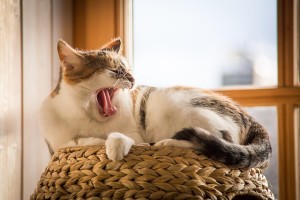
The “Hunch” Posture: As shown in the photo above, your cat will squat close to the ground, extend their neck flat and forward, and hunch their shoulders.
-
Chronic, Dry Coughing: The cough often sounds harsh, dry, or wheezy.
-
Open-Mouth Breathing: Cats are obligate nasal breathers. If your cat is breathing with their mouth open or panting like a dog, this is a veterinary emergency.
-
Rapid Breathing: A resting respiration rate of over 30 to 40 breaths per minute while sleeping or resting calmly is a warning sign.
-
Lethargy and Blue Gums: In severe attacks, a lack of oxygen will cause their gums to turn a pale blue or gray color, accompanied by sudden weakness.
Treatment Options: Helping Your Cat Breathe Freely
While feline asthma is a chronic condition that cannot be cured, it can be highly manageable with the right veterinary treatment plan.
Emergency Stabilization
If your cat is rushed to Paws & Claws in the middle of a severe attack, our priority is giving them immediate relief. We will place them in a dedicated oxygen cage and administer fast-acting bronchodilators to open their airways.
Long-Term Management
For daily care, we focus on reducing inflammation and preventing spasms:
-
Corticosteroids: These are the gold standard for reducing airway inflammation. They can be given as oral liquids, daily pills, periodic injections, or via a feline inhaler.
-
Bronchodilators: Medications that relax the airway muscles. These are often kept on hand as “rescue” medications in case of an acute attack.
-
Feline Inhalers (AeroKat): Just like humans use inhalers, cats can use them too! Using a specialized spacer mask called an AeroKat, we can deliver steroid medication directly to your cat’s lungs, avoiding the systemic side effects associated with oral steroids.
Take Action Today: Schedule a Consultation
Don’t ignore a chronic cough or dismiss it as “just another hairball.” If your cat is showing signs of respiratory distress, a professional veterinary evaluation is the safest and most compassionate step you can take.
Call our office to schedule an appointment for your feline friend: 850-906-0444