While grooming is a normal feline behavior, excessive grooming – also known as overgrooming – can be a sign that something isn’t quite right.
Many cat owners assume skin irritation or allergies are to blame, but emotional stress can trigger the same behavior. Understanding the difference is the first step toward helping your cat feel comfortable and healthy again.
What Is Overgrooming?
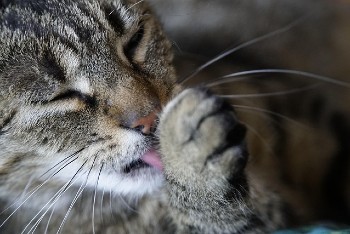
Cats are naturally meticulous groomers, often spending up to half of their waking hours cleaning themselves. However, grooming becomes a concern when it leads to:
- Hair loss or bald patches
- Red, irritated skin
- Scabs or sores
- Excessive licking focused on one area
- Changes in behavior or activity levels
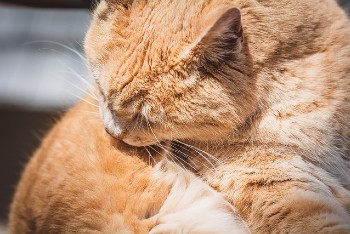
Overgrooming is often a symptom rather than a condition itself, meaning it’s important to identify the underlying cause.
The Two Main Culprits: Allergies vs. Stress
Allergies are one of the most common medical causes of excessive grooming in cats. When a cat experiences itchy or irritated skin, they may lick or chew the affected area in an attempt to find relief.
Common Types of Allergies in Cats
Flea Allergy Dermatitis
Some cats are highly sensitive to flea saliva. Even a single flea bite can trigger intense itching and excessive grooming, particularly around the tail, lower back, and hindquarters.
Environmental Allergies
Just like humans, cats can react to environmental allergens such as:
- Pollen
- Mold spores
- Dust mites
- Grass
These allergies often cause itching around the face, ears, neck, and paws.
Food Allergies
Certain proteins or ingredients in your cat’s diet may trigger an allergic reaction. Food allergies can cause skin irritation, itching, digestive issues, or a combination of symptoms.
A veterinarian can help identify allergies through physical exams, elimination diets, or other diagnostic testing.
Can Stress Cause Overgrooming?
Not all overgrooming is caused by physical discomfort. Cats are highly sensitive creatures, and emotional stress can manifest in physical ways – including excessive grooming.
Stress-related overgrooming is often considered a compulsive behavior. Grooming releases calming endorphins, which can temporarily help a cat cope with anxiety. Over time, however, the behavior can become habitual.
Common Sources of Stress in Cats
Cats thrive on routine, so even small disruptions can cause anxiety. Common stressors include:
- Moving to a new home
- Introducing a new pet
- Changes in household members
- Loud noises or construction
- Rearranging furniture
- Boredom or lack of enrichment
- Conflicts with other pets
Signs That Point to Stress
Stress-related overgrooming may be more likely if your cat:
- Has symmetrical hair loss, often on the belly, inner legs, or sides
- Appears physically healthy otherwise
- Started grooming excessively after a change in the environment
- Shows other signs of anxiety, such as hiding, reduced appetite, or inappropriate urination
Unlike allergies, stress-related overgrooming may occur without obvious skin inflammation.
When to See a Veterinarian for Overgrooming
Any persistent overgrooming should be evaluated by a veterinarian, especially if you notice:
- Bald patches
- Skin redness or sores
- Changes in appetite
- Weight loss
- Behavioral changes
- Signs of pain or discomfort
Early intervention can prevent skin damage and help identify underlying health concerns before they become more serious.
When to Schedule an Appointment at Our Tallahassee Vet Hospital
If you notice bald patches, open sores, or if your cat seems lethargic or irritable, it is time to see a professional. Do not wait for the symptoms to worsen.
At Paws & Claws Veterinary Hospital, we provide comprehensive dermatological and behavioral assessments for cats in the Tallahassee area.
Call our office today at 850-906-0444 or schedule an appointment online. We can help you rule out parasites and systemic illness so your pet can stop the itch and start feeling like themselves again.