Every pet owner knows that heart-sinking feeling when a gate is left unlatched, or a collar slips off during a walk. While we rely on tags and collars as a first line of defense, they are often the first things to get lost when a pet is on the move. In Tallahassee, where our pets enjoy everything from the trails at Tom Brown Park to the quiet neighborhoods of Bradfordville, a more permanent solution isn’t just a luxury – it’s a necessity.
Microchips: The Science of Staying Connected
A microchip is a sophisticated piece of technology roughly the size of a grain of rice. Unlike a GPS tracker, which requires battery power and a clear line of sight to satellites, a microchip is a passive transponder. It sits safely under your pet’s skin, carrying a unique identification number that can be read by any standard scanner at a veterinary office or animal shelter.
Because it doesn’t rely on a battery or moving parts, the chip is designed to last the entire life of your cat or dog. It’s a permanent link between you and your companion that can’t be chewed off, scratched away, or weathered by the Florida humidity.
Microchip Implantation: A Quick Procedure
Many pet owners worry that the implantation process is invasive, but it is remarkably straightforward. The chip is injected using a specialized needle in the loose skin between the shoulder blades. The sensation is very similar to a routine vaccination – most pets don’t even flinch, and no anesthesia or recovery time is required.
Once the chip is in place, the most critical step is registration. A chip is only as good as the information attached to it. We always encourage our clients to double-check their contact details in a national registry annually to ensure that if the unthinkable happens, the phone number on file is the one you still answer.
Keeping the Connection Strong
At Paws & Claws Veterinary Hospital, we are always happy to help you confirm that your pet’s microchip is fully functional, hasn’t migrated, or to provide you with the microchip number.
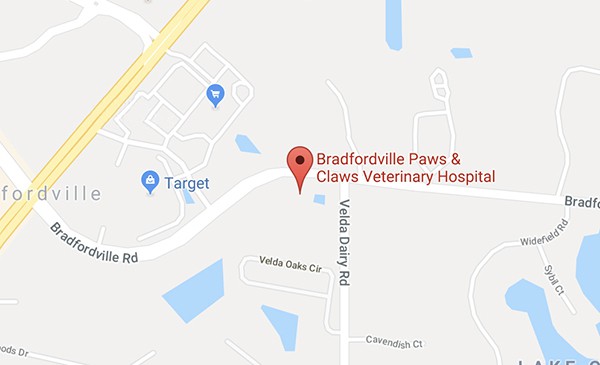
Protect your peace of mind. If your pet isn’t currently chipped, or if you aren’t sure if their registration is up to date, let’s get it sorted. Call us at 850-906-0444 and make an appointment to visit us on Bradfordville Road to secure your pet’s “ticket home.”
FAQs
Is it worth it if my cat never goes outside? Absolutely. Indoor cats are often the ones most likely to get lost and disoriented if they accidentally slip out a door or window during a delivery or a guest’s visit.

Does a microchip track my pet’s location? No. Think of it as an electronic ID card rather than a GPS. It doesn’t broadcast a signal; it only reveals your pet’s unique ID when scanned by a professional.
What if I move? You don’t need a new chip! You simply log into the registry website and update your address. It’s that simple.
I just adopted a pet from a Tallahassee shelter. Do I need a new microchip? No, you don’t need a second chip! Most rescues and shelters in Leon County microchip animals before adoption. However, the chip is likely still registered to the shelter. You will need to “transfer” the registration into your name. We can scan your new pet at PCVH to give you the chip number and the name of the registry company so you can update your contact information.
Are there ongoing monthly fees for a microchip? Generally, no. A microchip is a one-time purchase. However, some registry companies offer “premium” monthly or annual subscriptions for extra services like lost pet alerts or 24/7 medical hotlines. For basic reunion purposes, a standard one-time registration (or a lifetime registration fee) is all you need to keep your pet’s ID active in the database.